Monday, May 05, 2008

Advances Offer Hope for Spinal Cord Injury Patients

Cell transplantation, physical therapy show promise in restoring function

There is no cure for a spinal cord injury, but much headway has been made in clinical research that could lead to one. Other therapies have helped to restore some function in spinal cord injured patients. A look at some efforts?

The latest in cell transplantation

Cell-based therapies hold the potential for replacing cells and restoring function lost to disease or injury. Among those being developed to help treat spinal cord injuries:

Stem cells are building blocks capable of turning into various cells and tissues found in the body. Embryonic stem cells, in particular, are able to transform into any tissue, given the right biochemical instructions, and could be used to replace spinal cord cells lost during injury. However, human embryonic stem cell research is politically controversial, because culling the cells destroys embryos. Still in the research phase, stem cells have helped paralyzed rodents move again in several ways, including helping to regrow destroyed nerve cells in the spinal cord and successfully restoring myelin, a nerve fiber insulation that helps maintain the electrical conduction required to move.

Olfactory tissue, which covers about one-inch of the upper nasal cavity, contains many cells with regenerative potential, including olfactory ensheathing cells (OECs). Several experiments have found that OECs promote nerve regeneration and may restore function when implanted into an injured spinal cord. These OECs produce insulating myelin sheaths around the damaged nerve cells, encouraging regrowth. While research continues, some scientists, including Portugal's Dr. Carlos Lima, have transplanted olfactory tissue into patients with spinal cord injuries. Preliminary results were published in 2006 in the Journal of Spinal Cord Medicine.

Schwann cells: Another type of "ensheathing" cell, Schwann cells may also help stimulate nerve regeneration of an injured spinal cord. According to Dr. Wise Young, founding director of the W.M. Keck Center for Collaborative Neuroscience at Rutgers University, many laboratories have shown that Schwann cells alone will improve function after spinal cord injury in animals and even more so when they are combined with other therapies, such as OECs.

New advances in physical rehabilitation

Functional electrical stimulation: When connections between the brain and spinal cord are diminished by trauma, the ability to control movement can be eroded or lost. Functional electrical stimulation, or FES, systems can act as a substitute for those lost signals. FES systems apply a small electrical current that stimulates muscle contractions via electrodes that are either taped to the skin or surgically embedded. The contractions help maintain muscle mass, initiate movement in hands or legs or even stimulate the bladder or diaphragm. Dr. John McDonald of Baltimore's Kennedy Krieger Institute uses special exercise bicycles hooked up to FES systems to help paralyzed patients pedal, believing the repetitive activity helps restore function and also may stimulate regrowth of the damaged neural connections. McDonald also used FES in working with the late actor Christopher Reeve.

McDonald says: "We're focused on incremental improvements. What we ... say is this: No one can tell you whether you can walk or not walk. All I can say is doing an activity-based program in today's world is your best chance at meeting the cure halfway.''

Treadmill training uses repetitive motion to try to teach the legs how to walk again. A paralyzed person is suspended in a harness above a treadmill, reducing weight the legs have to bear. As the treadmill starts, therapists move the person's legs in a walking pattern. The theory driving the work is that paralysis causes "learned nonuse" of muscles, but the injured nervous system may be capable of recovery when certain conditions are optimized, including the patterned neural activity that accompanies treadmill walking. (Source: The Christopher and Dana ReeveFoundation Paralysis Resource Center.)

Activity-based, exercise or aggressive physical rehabilitation: Based on the same activity-triggering premise, several centers across the nation are using aggressive exercise, or activity-based therapy, to help restore function in some spinal cord injured patients. Results vary, depending on the patient's level of injury and how much time has passed since the injury.

But researchers like Young, of Rutgers, voice encouragement: "Many of the people who are currently not walking, if trained properly, would be able to walk. What is really necessary is more evidence-based medicine to indicate that these things really work and then to show to the insurance companies that this is an effective therapy so that they will cover it. Hundreds of thousands of peoples' lives would be affected.''

Centers include: Project Walk in Carlsbad, Calif.; BeyondTherapy, at the Shepherd Center in Atlanta; The Center for SCIRecovery at the Rehabilitation Institute of Michigan.

Pharmaceutical

Methylprednisolone, a steroid drug, became a standard treatment for acute spinal cord injury in 1990 when a large-scale clinical trial showed significantly better recovery in patients who were given the drug within the first eight hours after their injury. It appears to reduce the damage to nerve cells and decrease inflammation near the injury site by suppressing activities of immune cells. (Source: National Institute of Neurological Disorders and Stroke.)

Other drug-related research now under way includes: Studies to determine whether Riluzole, now used to treat Lou Gehrig's disease, may protect nerve cells and promote motor recovery when administered after spinal cord injury; and a trial involving the drug Cethrin, which has been found in animal studies to lessen post-traumatic neural cell death.

Gene therapy

Gene therapy carries the potential to provide the injured spinal cord with the specific gene products, or proteins, that it needs to promote functional recovery. Gene therapy is not a current treatment for spinal cord injuries but is being studied with animal models of spinal cord injury. The concept is to transfer into the spinal cord a gene encoding a therapeutic protein, such as a growth factor or an axon guidance molecule, or to transplant cells modified to incorporate the gene. When the gene is expressed, the cell makes the desired protein. (Source: "Spinal Cord Injury: Progress, Promise and Priorities,"' a publication of The Institute of Medicine, an arm of The National Academies.)

Labels: , , , , ,

Read the Full Post!
 

Wednesday, April 30, 2008

Decompression Aids Spinal Injury Recovery

Done within 24 hours, the procedure improved neurological outcomes a year later


Surgical decompression of the spinal cord involves the removal of various tissue or bone fragments that are being squeezed and comprising the spinal cord. While commonly done after an injury occurs, the timing of the procedure varies widely.

The study looked at 170 patients with cervical spinal cord injuries, graded as A (most several neurological involvement) to D (least severe), who underwent decompression surgery.

Six months after the surgery, 24 percent of the patients who had the surgery within 24 hours showed two-grade or greater improvement in their condition compared with only 4 percent in the group that had the surgery more than a day later.

"The initial results suggest that decompression within 24 hours of injury may be associated with improved neurological recovery at one-year follow-up. However, further recruitment of patients with long-term follow-up is necessary to validate these promising results," study author Michael Fehlings, head of the Krembil Neuroscience Center at the University Health Network in Toronto, said in a prepared statement.

Fehlings was expected to present the findings in Chicago April 28 at the annual meeting of the American Association of Neurological Surgeons.

Every year, almost 12,000 people in the United States and Canada, mostly young adults, sustain a spinal cord injury. Although surgery, such as decompression, can help, these procedures often do not dramatically improve overall recovery and outcome.

"This is an area of medicine that has not seen tremendous scientific advances, so there remains an urgent need to improve upon current interventions to help restore neurological function in patients with acute (spinal cord injury)," said Fehlings, who is also professor of neurosurgery at the University of Toronto.

Labels: , , , , ,

Read the Full Post!
 

Friday, April 18, 2008

New Discovery May Aid Treatment of Spinal Cord Injuries

A discovery by researchers at University of Minnesota may provide new insights into how the spinal cord controls walking, and this may pave the way for developing treatments for diseases of the central nervous like Parkinson?s disease and spinal cord injuries.

Led by Joshua Puhl, Ph.D., and Karen Mesce, Ph.D., in the Departments of Entomology and Neuroscience, the study has found a possibility that the human nervous system, within each segment or region of spinal cord, may have its own unit burst generator to control rhythmic movements such as walking.

The researchers chose to study a simpler model of locomotion in the medicinal leech, and this uncovered the residing spots of these unit burst generators and it also showed that each nerve cord segment has a complete generator.

It was discovered that a neuron triggers to set off a chain reaction that gives rise to rhythmic movement and the moment those circuits are turned on, the body essentially goes on autopilot.

The researchers mainly focused on the segmented leech for study as they have fewer and larger neurons, making them easier to study.

For most of us, we can chew gum and walk at the same time. We do not have to remind ourselves to place the right leg out first, bring it back and do the same for the other leg. So how does the nervous system control rhythmic behaviors like walking or crawling, said Mesce.

The study also discovered that dopamine, a common human hormone, can turn each of these complete generator units on.

Because dopamine affects movement in many different animals, including humans, our studies may help to identify treatments for Parkinsons patients and those with spinal cord injury, said Mesce.

The study was published online in the Journal of Neuroscience.

Labels: , , , ,

Read the Full Post!
 

Tuesday, April 08, 2008

Nanotechnology May Help Reconnect Nerves

U.S. researchers say they have created a nano-engineered gel that can enable severed spinal cord fibers to regenerate and grow.

Mice paralysed by spinal injuries have been able to walk again thanks to a treatment developed by scientists in the US. The therapy uses proteins that self-assemble into nano-fibers at the site of the injury, encouraging nerves to regrow.

Spinal cord injuries often lead to permanent paralysis and loss of sensation because the damaged nerve fibers can't regenerate, Northwestern University scientists said. Although nerve fibers or axons have the capacity to re-grow, they don't because they're blocked by scar tissue that develops around the injury.

The nanogel developed at the university's Feinberg School of Medicine inhibits formation of scar tissue and enables the severed spinal cord fibers to regenerate and grow, the scientists said.

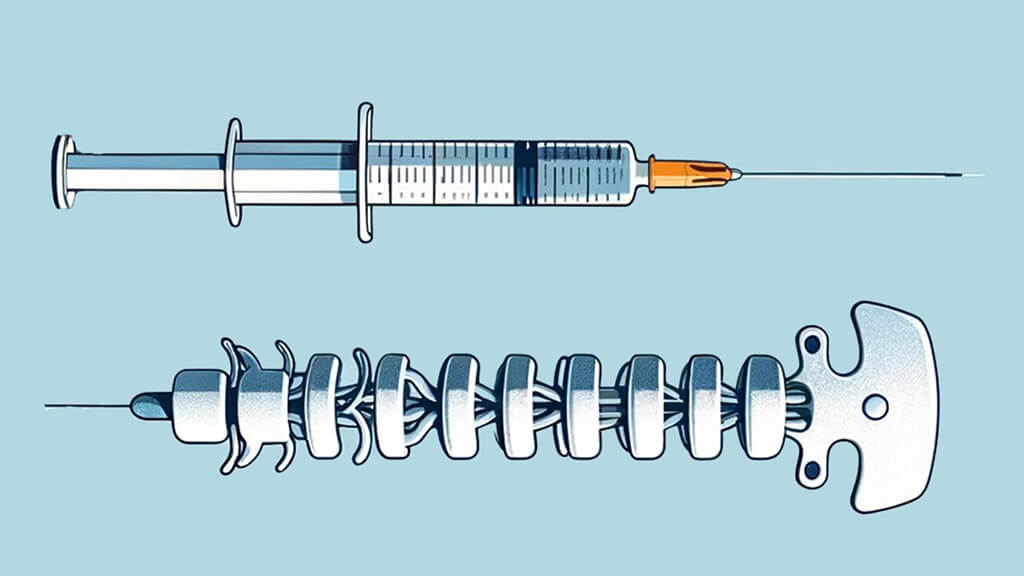
The gel is injected as a liquid into the spinal cord and self-assembles into a scaffold that supports new nerve fibers. When the gel was injected into mice with a spinal cord injury, after six weeks the animals had a greatly enhanced ability to use their hind legs and walk.

"It's important to understand that something that works in mice will not necessarily work in human beings," said study leader Dr. John Kessler, who noted that if the gel is eventually approved for humans, a clinical trial could begin within several years.

The research is reported in the Journal of Neuroscience.

Labels: , , , ,

Read the Full Post!
 

Monday, April 07, 2008

Experimental Russian Stem Cell Treatments Credited for Woman's Progress

Experimental Russian stem cell treatments for spinal injury credited for woman's progress


Notice: The following excerpts are taken from the Grand Rapids Press. A link the the entire article is listed below, and is well worth the time to read.
When Kadi DeHaan took her first steps in December, two years after a car accident forced her into a wheelchair, she did it in typical Kadi style: low-key, nonchalant and with a confident grin.


Apparently, she knew all along she would walk away from her pink and black wheelchair and her customized leg braces, despite a spinal cord injury at chest level and a grim prognosis that she would never walk again.

It happened after two years of intensive therapy and six trips to Russia, where her stem cells were harvested and then injected into her spinal cord to restore nerves.

Kadi's progress is "very much a unique and wonderful thing," said physical therapist Sandy Burns, director of the Center for Spinal Cord Injury Recovery in Rockford, a clinic affiliated with the Detroit Medical Center.

No one can say for sure if nearly two years of experimental treatments or hours upon hours of physical therapy -- a trio of three-hour sessions every week -- led Kadi to where she is today.

Probably both, said Burns, whose clients sometimes head to Russia or Portugal or China for treatments that aren't approved in the U.S. and generally aren't covered by insurance.

The physical therapy is a very important component, "but it's definitely Russia," that put Kadi back on her own two feet, Kadi's mom, Bonnie, insisted. "There are just too many coincidences. Kadi knows that what she's got she got from Russia."

After fundraising dollars ran out more than a year ago, Kadi's parents took out a loan to pay for the trips to Russia. The three-year protocol recommended by Moscow doctors will cost in excess of $150,000.

At the time, Kadi had just a bit of feeling in her feet and could walk only with lots of help from custom-built leg braces and a walker.

Since then, she's given up the braces and is "tons stronger" and "a lot more independent," she said. She's a full-time student at Davenport University who quaffs Mountain Dew and confesses to sending text messages during class.

"I've seen a lot of changes. I've seen motor return, sensory return, everything," Kadi said.

She's so convinced of the gains made at the NeuroVita Clinic that she's planning her seventh trip there in August. Quite a change of attitude after she declared the first trip "the worst three weeks of my life."

Burns, who is quick to say her clinic does not endorse any of the alternative treatments, acknowledged that the stem cell injections do seem to make a difference, at least for Kadi.

"Folks that have gone there have, I think, consistently reported that they are noticing changes. They are feeling more," Burns said.

She tempers her optimism with the reality of what she sees every day: some of her clients will never accomplish half as much as Kadi has. Progress often depends upon the severity of the spinal injury, not just the region of the spine that was damaged.

That's why Burns doesn't make predictions about what her clients will eventually accomplish. But of course, she hopes Kadi continues to make great strides.


The Neurovita Clinic


Where: Moscow, Russia
What: Treats spinal cord injuries, degenerative disorders and some cancers with patient's own stem cells, which are harvested, grown and re-injected. Clinic moved away from use of embryonic stem cells because of compatibility issues.
Insurance: Because treatment is experimental and not performed here, U.S. insurance policies don't cover it.
Website: neurovita.ru/eng_index.html

The NeuroVita clinic was founded by neurologist Andrey S. Bryukhovetskiy in 2002. It's located on the campus of the Russian State Medical University and can accommodate 35 patients.

The clinic dabbled in embryonic stem cell treatments but now uses only autologous material -- that which is obtained from the patient -- because there are no problems with compatibility, not to mention politics and religion, according to the Web site.

About 11 of every 100 patients with spinal cord injuries walk again after the stem cell treatments, Bryukhovetskiy told them.

Labels: , , , , , , , , , ,

Read the Full Post!